
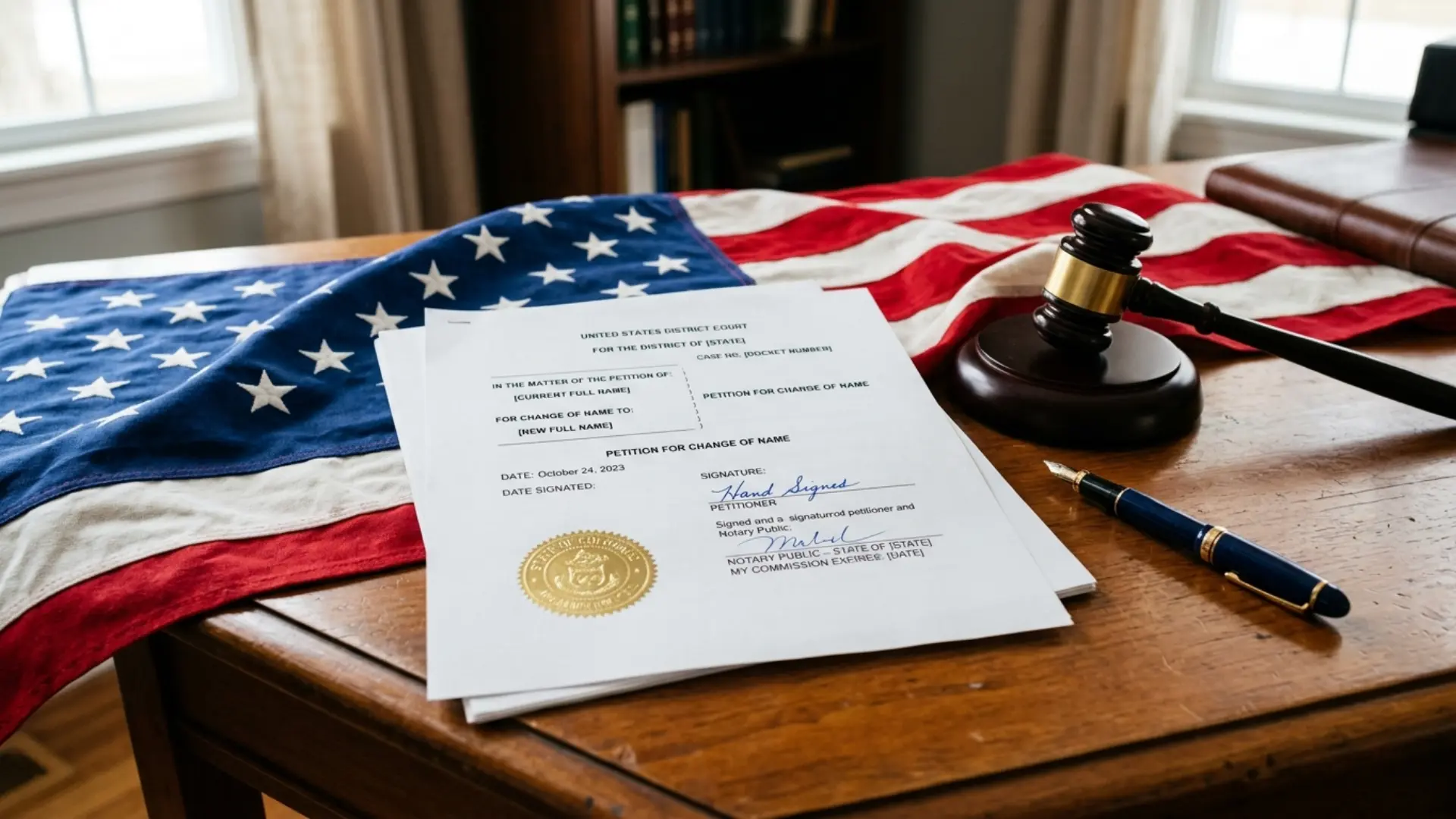
In the United States, changing your name can be part of the immigration and citizenship journey, or it can be done separately through the court system. Many people choose to change their names during the naturalization process, while others do it later for personal, practical, or legal reasons.
Understanding how the process works, when it can be done, and what steps follow is important to avoid future legal or administrative issues. This article explains the main rules, procedures, and key points related to name changes in the U.S.
Is it possible to change your name during a citizenship application?
Yes. In the United States, it is possible to change your name during the naturalization process. It is also possible to change your name separately through a court case, even if you are not applying for citizenship.
This article explains how the name change process works, its advantages and disadvantages, and what steps may be required afterward.
Name Change Is Not Limited to the Citizenship Process
It is important to understand that a name change is not only done during a citizenship application.
In the U.S., you can change your name in two main ways:
During a citizenship (naturalization) application
By filing a separate name change case in a state court
However, filing a separate court case only for a name change can be more time-consuming and expensive.
A name change case is filed in the court of the state where the person lives. In most cases, this is handled in state courts, and requirements may vary by state. Even in states where the process is relatively simple, documents must still be prepared carefully, and legal fees may apply.
Because of this, working with a licensed attorney in the relevant state is often necessary for court-based name changes.
In contrast, changing your name during the citizenship process is usually more practical because:
It can be requested within the same application
There is typically no additional filing fee for the name change itself
It is processed together with the citizenship application
This is one of the biggest advantages of changing your name during naturalization.
Name Change Procedures Differ by State
Name change rules and procedures may vary from state to state.
This means:
A name change is not required to be done during citizenship
It can also be done later through a court case
Each state may have different procedures and documentation requirements
A common situation involves name changes after marriage. In some states, marriage certificates clearly show both old and new names, while in others they may not. This can sometimes create issues when proving the legal link between names.
Why Do People Change Their Names in the U.S.?
There are several common reasons for changing a name:
A desire for a fresh start or new identity
Easier integration into daily life and society
Difficulty in spelling or pronunciation of the original name
Simplifying communication in professional and social environments
For many people, a name change is both a practical and personal decision.
Name Change During the Citizenship Application Process
If a name change is requested during the citizenship process, the procedure generally works as follows:
The request is submitted during the application
The final approval may be given during the interview stage
The applicant may still change their decision up to the oath ceremony
If approved, the new name is reflected on the Naturalization Certificate.
Documentation of a Name Change (Important)
The way a name change is documented may vary. There is no single uniform method.
In practice, it may be documented in the following ways:
A note or stamp on the Naturalization Certificate confirming the name change
Approval by a judge during the oath ceremony, with an official court record
In some cases, no clear document may be issued, requiring additional records to be requested later from the relevant authority
Because of this, it is very important to keep all documents related to the name change. Without proper records, it may become difficult in the future to prove the legal connection between the old and new name.
Records and the Legal Process
The citizenship process is part of a federal legal system, and official records may be stored in federal court or government archives.
In some cases, obtaining older records can take time, especially if files are archived. This is another reason why keeping personal copies of all documents is strongly recommended.
What to Do After a Name Change
After a legal name change, several important updates are usually required:
Updating a driver’s license
Updating identification documents
Renewing a passport
Updating other official records
Updating personal records in your home country, if applicable
These steps are typically completed by applying to the relevant institutions.
Updating Records in Your Home Country
If a person changes their name in the U.S., failing to update records in their home country may create issues later, such as:
Marriage registration processes
Birth registration of children
Inheritance procedures
Death certificate documentation
To avoid inconsistencies, it is important to ensure that official records remain aligned.
In most cases, the name change itself does not need to be repeated abroad. It only needs to be officially recorded with the relevant authorities.
Consular Registration and Record Updates
Many countries allow their citizens abroad to update civil registry records through their consulates.
Typically:
The name change in the U.S. can be recorded in official civil registries abroad
Supporting documents such as court orders or naturalization certificates are required
The process is handled through consular services
How MC Law Firm Can Help With Name Change Cases
Whether a name change is requested during the citizenship process or through a separate court case, MC Law Firm provides legal guidance to help ensure the process is handled correctly and efficiently.
Our team can assist with:
Preparing all required documents
Filing name change petitions with the appropriate court
Handling state-specific rules and procedures
Ensuring proper updates to official records after the name change
Phone: 201-957-0909
Email: [email protected]
Instagram: @allthingsimmigration

