
Why might someone arriving in the United States with a valid visa be questioned, sent to secondary inspection, or denied entry at the airport?
Having a valid U.S. visa does not guarantee entry into the country.
A visa allows you to travel to the United States and request permission to enter at a port of entry. The final decision is made by U.S. Customs and Border Protection (CBP), the federal agency responsible for inspecting travelers at U.S. borders and airports.
CBP may review your reason for traveling, visa category, previous immigration records, and whether you are legally eligible to enter the United States. Based on this review, you may be allowed to enter, sent for additional questioning, or denied entry.
What Are CBP and Secondary Inspection?
CBP is the federal agency responsible for inspecting travelers at U.S. airports, land borders, and seaports.
Different immigration agencies have different responsibilities. USCIS handles immigration applications, ICE handles immigration enforcement and detention, and CBP determines whether travelers can enter the United States.
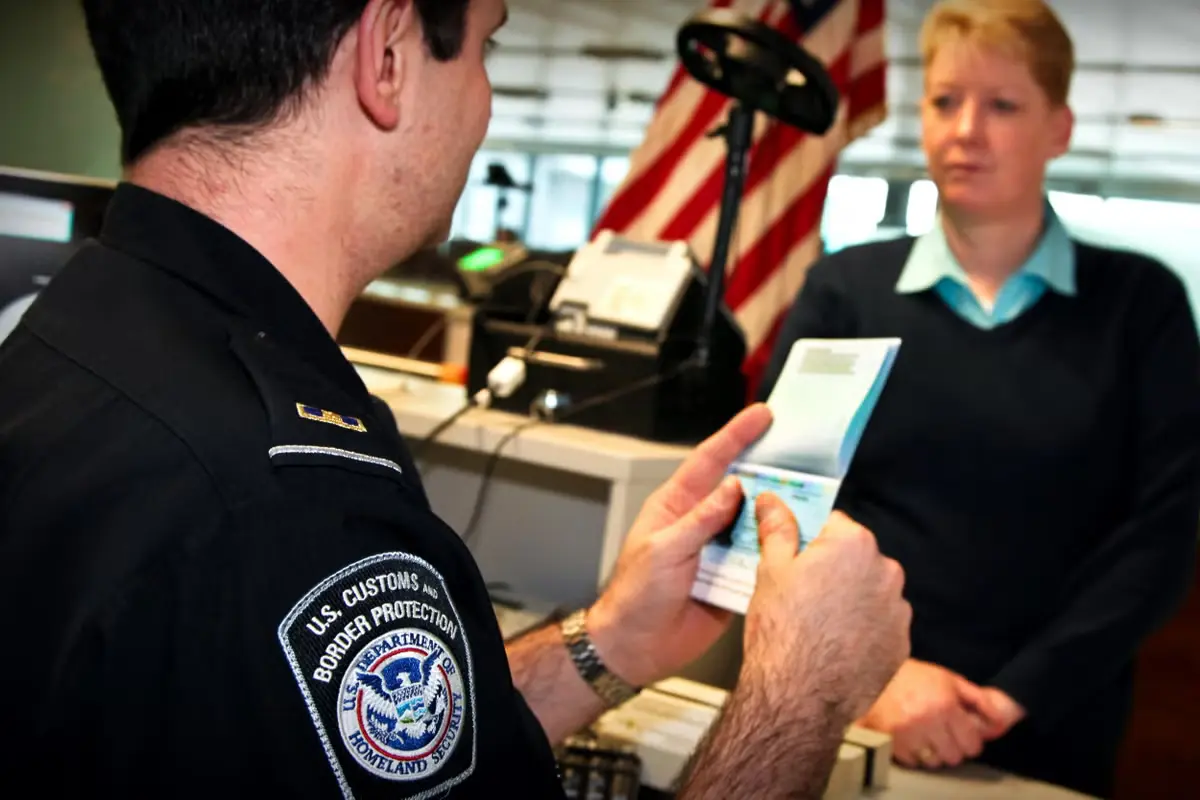
When you arrive at a U.S. airport, you usually go through primary inspection first. A CBP officer checks your passport and visa and may ask about your travel plans, how long you intend to stay, where you will stay, and when you plan to leave.
If the officer needs more information, you may be sent to secondary inspection, which involves a more detailed review.
Common reasons include:
- Questions or inconsistencies in your documents or answers.
- A travel purpose that does not appear to match your visa category.
- Previous travel or immigration records.
- Possible immigration status violations or unauthorized employment.
- Alerts in government databases.
- Previous arrests or criminal records.
- Concerns that you may be living or working in the United States without proper authorization.
- A CBP officer deciding that further review is necessary.
- Random selection.
Being sent to secondary inspection does not automatically mean you have violated immigration law or will be denied entry. CBP also explains that secondary inspection does not always involve suspected wrongdoing.
Which Travel Situations or Visas Can Cause Problems?
Having a valid visa does not necessarily mean that your travel plans meet the requirements of that visa.
CBP considers why you are entering the United States and whether your planned activities are allowed under your visa category.
For example, additional questioning may occur when a tourist is suspected of planning to work in the United States, an international student is no longer attending school, or someone returns to the country shortly after a lengthy previous stay.
Traveling multiple times on a B-1/B-2 visa is not automatically a violation. However, if your visits are very long or frequent, CBP may question whether you are actually living, working, or earning income in the United States rather than visiting temporarily.
For F-1 students, a valid visa is not the only requirement. Students must also maintain their immigration status, remain enrolled in an eligible educational program, meet their academic requirements, and avoid unauthorized employment.
Travelers with E-2, O-1, or other nonimmigrant visas may also face secondary inspection. The main question is whether their actual travel purpose matches the activities permitted by their visa.
Green Card holders may also be sent to secondary inspection, although different legal rules apply to returning permanent residents.
A previous arrest does not automatically mean you will be denied entry. It may, however, lead CBP to ask additional questions or review your records more closely.
What Happens During Secondary Inspection?
During secondary inspection, CBP takes a closer look at whether you are eligible to enter the United States.
Officers may ask questions about your reason for traveling, planned length of stay, accommodation, previous visits, employment, income, education, family connections, business activities, and immigration history.
Federal law allows CBP to ask travelers seeking admission for information about their travel purpose, intended stay, and eligibility to enter the country.
Your answers at the airport can be important. In some cases, CBP may take a sworn statement or create records that could be reviewed during future visa or immigration applications.
Being held in a separate area for secondary inspection does not automatically mean you have been arrested for a crime.
However, the situation may lead to other immigration procedures, including:
- Withdrawal of application for admission.
- Expedited removal.
- Credible fear screening.
- Immigration detention.
The outcome depends on the facts of your case and the legal issues identified by CBP.
Can CBP Search Your Phone?
Under certain circumstances, CBP can examine cell phones, laptops, and other electronic devices at the border.
These inspections are generally called border searches. Different legal rules may apply to searches at international borders compared with searches inside the United States.
Not every traveler is subject to an electronic device search, and being sent to secondary inspection does not automatically mean your phone will be searched.
According to CBP’s FY2024 data, the agency processed more than 420 million travelers and searched electronic devices belonging to 47,047 travelers. That represents less than 0.01% of international travelers. If officers cannot access a device because it is password-protected, they may hold the device or extend the inspection.
Refusing to provide access may be considered as part of CBP’s overall review. However, it does not automatically mean that every traveler who refuses access will be denied entry.
Can You Have a Lawyer During Secondary Inspection?
Whether someone seeking admission to the United States has a general right to legal representation during primary or secondary inspection is a disputed legal issue.
CBP may take the position that travelers do not have such a right during routine immigration inspections. Different protections may apply in certain situations, such as detention related to a criminal investigation.
As a result, an attorney may not always be allowed to enter the CBP inspection area or remain with the traveler during questioning.
Because opportunities for legal intervention can be limited once secondary inspection begins, travelers with known immigration or CBP issues should consider speaking with an immigration attorney before traveling.
A pre-travel legal review may include:
- Previous immigration and CBP records.
- Visa category and planned activities.
- Possible reasons for being found inadmissible.
- Previous immigration status violations.
- Unauthorized employment.
- Arrests or criminal records.
- Previous removal orders or visa cancellations.
An attorney can also help identify necessary documents and explain how past immigration issues may affect entry.
The goal is not to memorize answers. It is to understand your situation and be prepared to explain it accurately and consistently.
What Happens If CBP Denies You Entry?
Saying “I was sent back from the airport” does not explain what immigration action CBP actually took.
Depending on the circumstances, the outcome may involve:
- Withdrawal of application for admission.
- Expedited removal.
- Visa cancellation.
- Another finding of inadmissibility.
- Credible fear screening.
These procedures have different legal consequences.
Withdrawal of Application for Admission
In some cases, CBP may allow a traveler to withdraw their request to enter the United States.
This is called withdrawal of application for admission.
CBP has discretion over whether to allow this option. It is not automatically available to every traveler.
Expedited Removal
In certain situations, CBP can issue an expedited removal order.
This procedure allows immigration authorities to order someone removed from the United States without going through the usual immigration court process.
An expedited removal order can have serious consequences for future visa applications and attempts to enter the United States.
In some cases, expedited removal may result in a five-year bar on returning to the United States.
However, this does not apply automatically to everyone who is turned away at an airport. The legal reason for inadmissibility, previous removal history, and other immigration records all matter.
After being denied entry, it is important to identify and preserve any relevant documents, including:
- Documents provided by CBP.
- Forms you signed.
- Records of visa cancellation.
- Notes or stamps in your passport.
- Return flight and travel information.
- Communications from CBP or the airline.
These records can help an attorney determine what happened and what options may be available.
Can You Apply for Another Visa After Your Visa Is Canceled?
Yes, applying for another U.S. visa may still be possible after a visa cancellation.
A canceled visa does not automatically mean you can never receive another U.S. visa.
Before applying again, it is important to understand why the previous visa was canceled and whether CBP issued any removal order or finding of inadmissibility.
An attorney may need to review whether you qualify for a waiver that could allow you to overcome certain grounds of inadmissibility.
Any previous airport incident must be disclosed accurately and completely when required during a new visa application.
Hiding a previous CBP action or providing false information can create additional immigration problems.
What If You Do Not Know Why You Were Denied Entry?
In some cases, you may be able to request government records under the Freedom of Information Act (FOIA).
FOIA requests may help obtain records from CBP or other government agencies, including:
- Secondary inspection notes.
- Forms and statements you signed.
- Reasons for visa cancellation.
- Withdrawal or expedited removal records.
- Available records related to electronic device inspections. These documents may help clarify what happened and what legal options should be considered.
What Should You Do After Being Denied Entry?
If you were denied entry at a U.S. airport, the first step is to determine exactly what action CBP took.
Withdrawal of admission, expedited removal, visa cancellation, and findings of inadmissibility are not the same. Each may affect your future immigration options differently.
Depending on your situation, the next steps may include:
- Requesting records through FOIA.
- Considering a new nonimmigrant visa application.
- Reviewing any grounds of inadmissibility.
- Exploring available waiver options.
- Evaluating the consequences of an expedited removal order.
Applying for another visa without knowing whether you have a removal order or inadmissibility finding can be risky.
You may also have questions about the cost of returning to your home country.
Not every traveler who is denied entry must personally purchase a new return ticket. Responsibility may depend on the circumstances and the airline’s legal obligations.
However, the arrangements for returning a traveler and obtaining a refund for an earlier ticket are separate matters. Refund eligibility depends on the airline’s fare conditions and refund policies.
What Happens If You Say You Are Afraid to Return to Your Country?
If you tell CBP that you are afraid to return to your home country or want to seek asylum, your case may move into a different immigration process.
Federal law provides procedures for certain travelers who express a fear of persecution or torture. Depending on the circumstances, you may be referred for a credible fear screening.
This process may involve a credible fear interview, immigration detention, and an evaluation of whether you may qualify for asylum or another form of protection.
Although access to legal representation during regular airport inspections is limited, different rules apply during the credible fear process.
A person undergoing credible fear screening may be able to consult with an attorney, authorized representative, family member, or another adviser before the interview.
The government does not provide this consultation free of charge.
What Is a Hranka Waiver?
Some nonimmigrant visa applicants who are considered inadmissible to the United States may qualify for a discretionary waiver under INA §212(d)(3).
This option is commonly known as a Hranka waiver.
The name comes from the immigration decision Matter of Hranka, 16 I&N Dec. 491 (BIA 1978).
When evaluating this type of waiver, immigration authorities may consider three main factors:
- The possible risk to society if the person is admitted to the United States.
- The seriousness of any immigration or criminal law violation.
- The person’s reason for wanting to enter the United States.
The decision does not require every applicant to have an exceptionally urgent or compelling reason for entering the country.
However, a Hranka waiver is not an automatic solution.
Before considering this option, it is necessary to determine the specific ground of inadmissibility, whether a waiver is legally available, the visa category involved, and the type of action previously taken by CBP.
Conclusion: A U.S. Visa Does Not Guarantee Entry
A valid U.S. visa allows you to travel to the United States and request permission to enter. It does not guarantee that CBP will admit you.
At the airport, CBP may review your travel purpose, visa category, previous visits, immigration history, employment or education status, and overall eligibility to enter the country.
Some travelers are admitted after primary inspection. Others are referred to secondary inspection for additional questioning.
More serious situations may involve visa cancellation, withdrawal of application for admission, or expedited removal. Travelers who express fear of returning to their home country may be referred for credible fear screening.
If you have been denied entry, the most important first step is to understand exactly what immigration action was taken against you.
When necessary, CBP records may be requested through FOIA. Once the facts are clear, an attorney can evaluate whether a new visa application, an inadmissibility review, or an available waiver may be appropriate.
MC Law Firm provides personalized legal evaluations for travelers facing CBP secondary inspection issues, airport entry denials, visa cancellations, expedited removal, and inadmissibility concerns.
Our legal team can also help review FOIA records and evaluate possible Hranka waiver options when applicable.
