
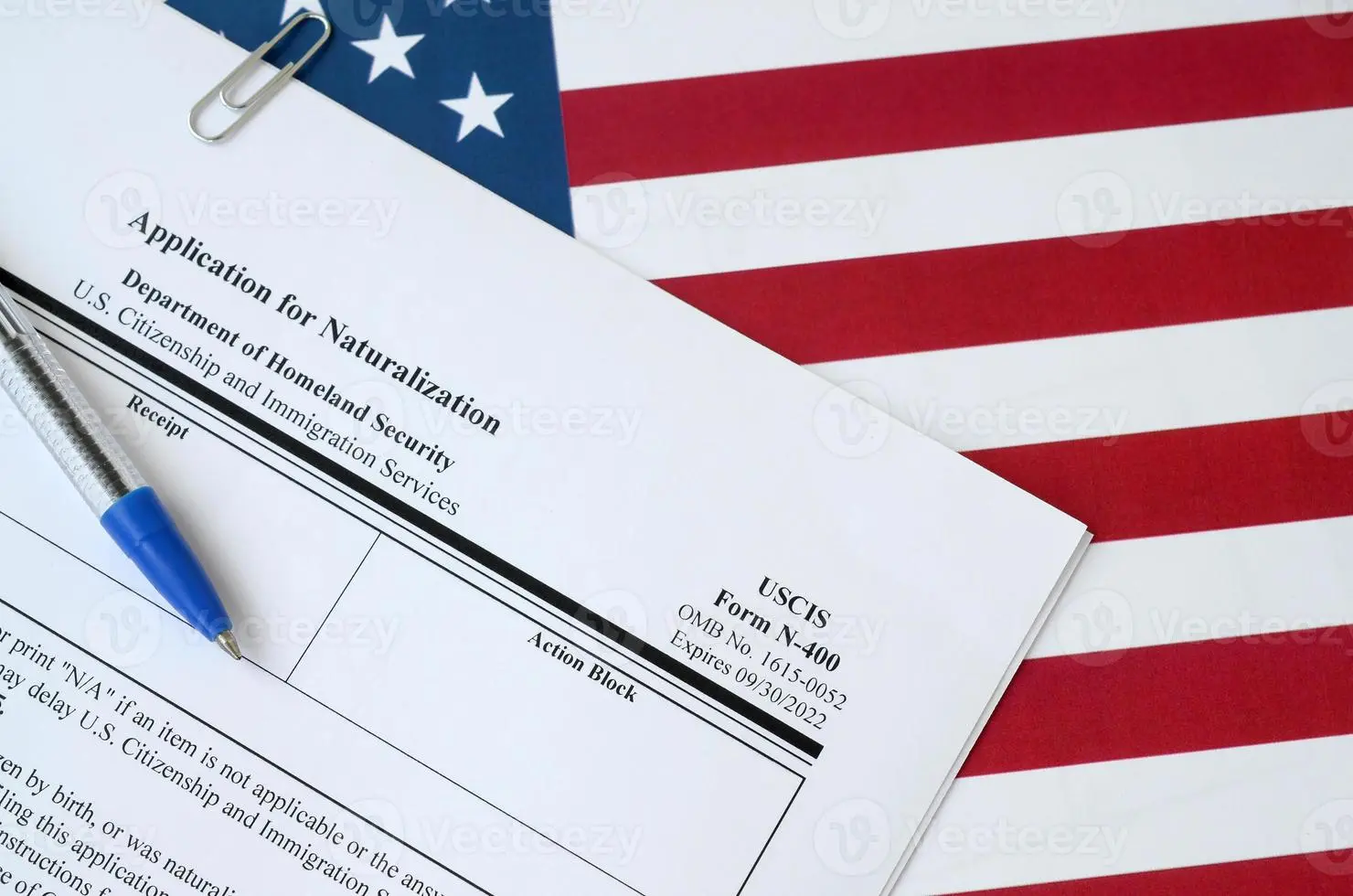
You applied for U.S. citizenship, and USCIS said no. Is that the end of the road? Usually, it is not.
Citizenship law works differently from most other areas of immigration law. If USCIS denies your naturalization application, you can ask the agency to look at your case again by filing Form N-336. If USCIS still says no, you may be able to take your case to federal court, where a judge can decide the question all over again.
USCIS may also interview you and then simply not make a decision. If more than 120 days pass after your interview, federal law gives you a way to ask a judge to step in.
This article explains the main citizenship requirements, the most common reasons applications run into trouble, and exactly what your options are if you are denied or left waiting.
Is U.S. Citizenship a Right?
If you meet all the requirements Congress wrote into the law, USCIS does not get to say no just because it feels like it. Naturalization is not a favor the government hands out at its discretion.
But two things balance that out:
You have to prove your case. The burden is on you to show you qualify, and doubts are generally resolved against you (Berenyi v. District Director, 385 U.S. 630 (1967)).
Judges cannot bend the rules out of sympathy. A federal court cannot grant citizenship to someone who does not meet the legal requirements, no matter how compelling the story (INS v. Pangilinan, 486 U.S. 875 (1988)).
The practical takeaway: your case starts with a USCIS officer, but it does not have to end there.
What Do You Need to Qualify?
Most people apply under one of two paths — the general 5-year path, or the 3-year path for spouses of U.S. citizens.
| Requirement | General path | Married to a U.S. citizen |
|---|---|---|
| Age | 18 or older | 18 or older |
| Status | Valid green card | Valid green card |
| Continuous residence | 5 years | 3 years |
| Physical presence in the U.S. | At least 30 months | At least 18 months |
| Lived in your state/USCIS district | Last 3 months | Last 3 months |
| Good moral character | Last 5 years | Last 3 years |
| English and civics tests | Yes (exceptions apply) | Yes (exceptions apply) |
| Attachment to the Constitution, oath | Yes | Yes |
Men who were in the U.S. between ages 18 and 26 may also need to show they registered for Selective Service.
Two of these cause the most trouble in practice: continuous residence and good moral character.
Continuous Residence: Keeping Your Ties to the U.S.
Continuous residence means your home base has stayed in the United States without a real break. Long trips abroad are what usually cause problems:
A single trip longer than 6 months but less than a year creates a presumption that you broke your continuous residence. This presumption can be overcome — but you have to prove it, with evidence that you kept your home, job, family, and financial ties in the U.S. (lease or mortgage, pay stubs, tax returns, bank statements, and so on).
A single trip of one year or more breaks continuous residence outright, with limited exceptions. In most cases the clock starts over. Some people working abroad for qualifying employers can protect their time by filing Form N-470 before they leave.
Watch out for a second, separate requirement: physical presence. Even if none of your trips was long enough to break continuous residence, a lot of short trips can still push your total days in the U.S. below the 30-month (or 18-month) minimum. These are two different tests, and you have to pass both.
If you travel frequently, add up your days carefully before you file.
What Does “Good Moral Character” Really Mean?
This phrase sounds like a judgment about whether you are a good person. It is not. It is a technical legal standard defined in the immigration statute and regulations (INA § 101(f), 8 C.F.R. § 316.10).
Things that can come up in this review include:
Arrests, criminal charges, or convictions
Giving false or misleading information to USCIS or any other government agency
Failing to file tax returns or pay taxes owed
Falling behind on court-ordered child support
Certain offenses involving drugs, alcohol, or gambling
Voting illegally or falsely claiming to be a U.S. citizen
Permanent bars vs. temporary bars
A few things are permanent and never age out:
A murder conviction
An “aggravated felony” conviction on or after November 29, 1990
Most other issues only block you if they happened during the statutory period window described below.
Why the last 5 (or 3) years matter most the look-back
USCIS mainly examines the 5 years before you filed (3 years if you are applying through a U.S. citizen spouse), continuing up through the day you take the oath.
But two important exceptions cut against the idea that older problems are automatically forgotten:
USCIS can look further back. Under INA § 316(e) and 8 C.F.R. § 316.10(a)(2), the agency may consider your conduct before the statutory period when judging your present character.
An old conviction can threaten your green card, not just your citizenship. If an offense counts as a “crime involving moral turpitude” or an aggravated felony under immigration law, it can make you deportable. In that situation, applying for citizenship can trigger removal proceedings.
So “that was more than five years ago, it doesn’t matter anymore” is not a safe assumption.
One important warning
Under 8 U.S.C. § 1429, USCIS cannot approve your naturalization while removal proceedings are pending against you. If you have any criminal history, get your record reviewed before you file. Filing can surface problems you did not know you had.
A Criminal Record Does Not Automatically Disqualify You
An arrest, a charge, or even a conviction does not by itself mean you can never become a citizen. The analysis is technical and depends on the details.
If you have an arrest on your record, the officer needs the whole story, not just the entry in the database:
Why were you stopped or arrested?
What were you charged with?
Were charges actually filed?
How did the case end conviction, dismissal, charges dropped?
What was the final sentence, and did you complete it?
Back all of this up with certified court records (the “disposition”) and police reports. There is a real difference between an officer who sees only an arrest and an officer who sees the full, documented outcome.
One trap worth knowing: immigration law has its own definition of “conviction.” Some cases that were expunged, sealed, or resolved through deferred adjudication under state law still count as convictions for immigration purposes.
Can You Be Denied Even Though You Qualify?
Yes, and it happens. You can meet the residence requirement, have no moral character issues, and pass both tests — and still get a denial built on a thin or debatable rationale.
Common examples:
Missing paperwork used as the reason. You submitted your federal tax returns, and the denial cites your failure to submit state tax returns.
Questions about an old marriage or divorce. The officer suggests a prior marriage may not have legally ended before the next one began.
Reopening your original green card case. This comes up often when the green card came through marriage. USCIS can revisit whether you were lawfully admitted as a permanent resident in the first place — even many years later.
When a denial rests on a legally shaky conclusion like this, there are ways to challenge it.
Step One After a Denial: Form N-336
If USCIS denies your Form N-400, your main administrative option is Form N-336, Request for a Hearing on a Decision in Naturalization Proceedings (INA § 336(a)).
The 30-day deadline is critical
You must file Form N-336 within 30 calendar days of receiving the denial (generally 33 days if it was mailed to you). USCIS will usually reject a late filing.
Miss this deadline and you lose the administrative review — and with it, in practical terms, your path to federal court. Your only option becomes starting over with a new N-400.
N-336 is not just resubmitting your application
A successful request identifies what went wrong. That usually means:
Pointing to the specific legal or factual mistake in the denial
Submitting documents that were missing or overlooked, or new evidence
Including a written legal argument explaining why the decision should be reversed
What happens next
USCIS is supposed to schedule your hearing within 180 days of receiving a timely N-336 (8 C.F.R. § 336.2(b)). In practice, delays are common.
Your case goes to a different officer than the one who denied it — one at the same level or higher. There is usually a new interview. The officer can review the entire record and ask for more evidence or testimony.
USCIS can reverse the denial or stand by it.
N-336 or a new N-400?
The hearing request is not always the better choice. If you were denied because you did not pass the English or civics test, filing a fresh N-400 is often faster and cheaper. But if the denial rests on a legal error, and you may eventually want a federal judge to hear your case, the N-336 is a required step you cannot skip.
Filing fees change. Check uscis.gov/n-336 for the current fee and filing address before you send anything.
If the N-336 Is Denied: Going to Federal Court
Under 8 U.S.C. § 1421(c), if USCIS denies your case again after the N-336 hearing, you can file a lawsuit in the U.S. District Court where you live.
Three things to know:
You must exhaust the administrative process first. No N-336, no lawsuit. You cannot skip straight to court after the initial denial.
You have 120 days from the final N-336 decision to file (8 C.F.R. § 310.5(b)).
Venue is where you live. Someone living in New Jersey, for example, would file in the U.S. District Court for the District of New Jersey.
What “De Novo Review” means?
This is the strongest protection in citizenship law. The statute says the court makes its own findings of fact and conclusions of law and, if you ask for one, holds a hearing de novo meaning from the beginning.
The judge is not limited to asking whether the USCIS officer was reasonable. The judge decides whether you qualify for citizenship, independently, and can take evidence and hear testimony to do it.
That is far more powerful than the deferential review that applies to most other immigration decisions.
Is this an immigration judge?
No. This is not Immigration Court. Your case is heard by an Article III federal judge — a life-tenured judge appointed under the Constitution, entirely separate from the immigration court system that handles deportation cases. This is one of the clearest ways citizenship law differs from the rest of immigration law.
What If USCIS Never Decides? The 120-Day Rule
There is a completely separate problem: you were interviewed, and then nothing happened.
Under 8 U.S.C. § 1447(b), if USCIS has not decided your case within 120 days of your naturalization examination (your interview), you can file in federal district court. The judge then has two choices:
- Decide your citizenship case directly
- Send it back to USCIS with instructions
This is not the same as a mandamus case
People mix these two up constantly. They are different tools for different problems:
| Feature | § 1447(b) petition | Mandamus / APA lawsuit |
|---|---|---|
| Legal basis | 8 U.S.C. § 1447(b) | 28 U.S.C. § 1361 and/or the APA |
| When it applies | You were interviewed and 120+ days have passed with no decision | Delay at other stages — most often when USCIS never schedules the interview |
| Standard | A specific right created by statute | You must show the delay is “unreasonable” — a harder argument |
| What the judge can do | Decide the case, or remand with instructions | Generally order USCIS to make a decision, not a particular one |
If you have had your interview and 120 days have gone by, § 1447(b) is your tool. Mandamus is for delays before that point.
Either way, a long-pending application does not always mean waiting is your only option.
Keep the two situations straight:
USCIS denied you: File N-336 within 30 days → if still denied, file a § 1421(c) lawsuit within 120 days for de novo review.
USCIS won’t decide: Once 120 days pass after your interview, file a § 1447(b) petition.
Can a Marriage-Based Green Card Be Re-Examined Now?
Yes. When you apply for citizenship, USCIS can go back and review whether you obtained your green card lawfully in the first place.
Issues that resurface include:
Whether a prior marriage was legally ended before the next one began
Gaps or errors in divorce documentation
Inconsistencies between what you said years ago and what you say now
This matters because a finding against you here threatens more than citizenship – it can put your permanent resident status at risk. If USCIS reaches a legally questionable conclusion, the N-336 and, if necessary, federal court become important.
Do Tax Problems Sink Your Application?
They can, but not every tax issue is fatal.
What matters:
The nature of the problem: Unfiled returns, an unpaid balance, and deliberate tax evasion are treated very differently.
Whether you are addressing it: An installment agreement with the IRS, kept current, is very different from ignoring the debt. Bring documentation of the plan and your payments.
How you filed: If you filed as a nonresident while holding a green card, USCIS may argue you abandoned your permanent residence.
What you gave USCIS: Officers sometimes turn a documentation gap into a denial for example, denying a case because state tax returns were not submitted even though the federal returns were. If that happens, the legal basis for the denial is worth challenging.
Do You Need a Lawyer at the Interview?
There is no rule requiring one. If your case is genuinely clean and you have checked it carefully, filing on your own is a reasonable choice.
Legal help becomes much more important if your file includes:
Any arrest or criminal record, or a past conviction
Tax problems or child support arrears
Long trips abroad or a continuous residence question
An unclear prior marriage or divorce
Inconsistencies in earlier immigration filings
What can a lawyer actually do in the interview?
The interview is between you and the officer your attorney cannot answer for you. But having one there matters in complicated cases. An attorney can object to questions that go beyond what the law allows, step in if the officer is pressing you toward a statement that is not accurate, ask for clarification on the record, and make sure the record is built with an eye toward a possible N-336 or federal case later.
That last point is easy to underestimate. What gets said at the interview, and the reasons USCIS puts in writing, shape everything that follows.
Review Your Case Before You File
The single most valuable step in a naturalization case happens before you file anything: finding the problems yourself.
If you have criminal history, arrests, tax issues, long absences, complicated prior marriages, or anything unusual in an earlier immigration filing, get it reviewed first. Remember that an N-400 invites USCIS to re-examine your entire immigration history. In a problem case, filing can cost you more than a denial it can cost you your status.
And if something unexpected surfaces at your interview, or the officer starts moving toward a questionable conclusion, waiting for the denial letter before getting help is rarely the best strategy. Early intervention can resolve a problem before it ever becomes an N-336 or a lawsuit.
In conclusion
A USCIS denial does not have to be the last word:
If you are denied: File Form N-336 within 30 days to ask USCIS to reconsider.
If USCIS denies you again: File in federal district court within 120 days. An independent Article III judge reviews your eligibility de novo from scratch.
If USCIS never decides: Once 120 days have passed since your interview, you can file a § 1447(b) petition. For delays at earlier stages, a mandamus or APA lawsuit may be the right tool.
Criminal history, arrests, good moral character, taxes, child support, continuous residence, past marriages, and earlier immigration filings can all shape the outcome. If your case has any of these complications, a thorough legal review before filing is worth far more than one after a denial.
Contact Us
If your citizenship application was denied, if you are in the N-336 process, if more than 120 days have passed since your interview with no decision, or if your case involves criminal history, tax issues, continuous residence, or questions about earlier immigration filings, our attorneys can review your options with you.
201-957-0909
[email protected]
Follow Us
Instagram: @allthingsimmigration
