
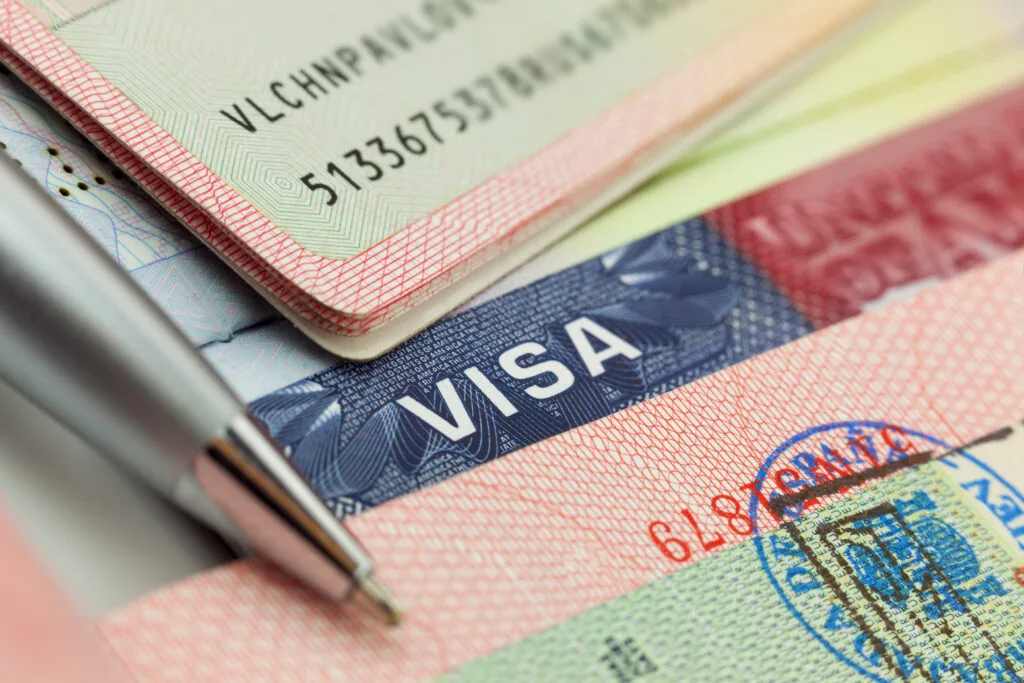
Although the immigrant visa suspension affecting 75 countries has been lifted, many applicants are still waiting for their visa applications to be processed at U.S. consulates. Some have not yet been scheduled for an interview, while others have completed their interviews but are still waiting for a decision.
What can you do if your consular processing remains delayed even after the suspension has been lifted? Can you file a Mandamus lawsuit in federal court?
In certain cases, federal lawsuits under a Writ of Mandamus or the Administrative Procedure Act (APA) may provide a legal option to address long delays in immigrant visa processing.
In our previous article, we explained the lifting of the 75-country visa suspension, what Mandamus and APA lawsuits are, and how these legal options generally work.
In this article, we focus on applicants affected by the 75-country suspension whose consular processing remains incomplete. We explain when a federal lawsuit may be possible, where it can be filed, and what happens after the lawsuit begins.
Which Immigrant Visa Cases May Qualify for a Mandamus Lawsuit After the 75-Country Suspension?
The lifting of the 75-country visa suspension does not mean that all pending immigrant visa applications will automatically be processed. Before considering a federal lawsuit, it is important to understand why an application is still pending.
There is an important legal distinction in consular processing: Has the application been denied, or does the consulate still have an action it must complete?
This distinction often involves visa refusals under Section 221(g) of the Immigration and Nationality Act (INA).
Many applicants see the status “Refused” after their visa interview. However, a refusal under Section 221(g) does not always mean the visa process is permanently over.
A consulate may request additional documents or place an application under administrative processing. In these situations, the application is legally refused, but it may be reconsidered once the missing documents are submitted or administrative processing is completed.
This raises an important legal question.
U.S. immigration law recognizes a doctrine called Consular Nonreviewability. This doctrine significantly limits the ability of federal courts to review visa refusal decisions made by U.S. consular officers.
However, a 221(g) refusal involving ongoing administrative processing may be legally different from a final refusal based on a specific ground of inadmissibility.
At MC Law Firm, one legal argument we consider in appropriate cases is that a 221(g) refusal involving ongoing administrative processing does not necessarily mean the government has completed all required actions on the application. If the consulate still has a legal duty to act and that action has been unreasonably delayed, a federal lawsuit may be an option.
Federal courts do not all take the same approach to this issue. Some courts consider a 221(g) refusal sufficient to satisfy the government’s duty to act, while others may examine whether administrative processing is still ongoing. Therefore, both the legal arguments and the court where the lawsuit is filed are important.
The situation is different when a consulate has issued a final refusal based on a specific legal ground.
For example, some applicants affected by the 75-country suspension or Diversity Visa decisions have received refusals based on public charge grounds. Public charge is an immigration determination related to whether an applicant is likely to become dependent on certain government benefits in the United States.
When a consulate refuses a visa on this or another legal ground, a Mandamus lawsuit generally cannot be used to overturn that decision. The doctrine of Consular Nonreviewability significantly limits federal court review of these final refusals.
Other legal options may exist in certain circumstances, but Mandamus is not a general appeal process for unfavorable consular decisions.
For this reason, MC Law Firm does not evaluate a case based only on how long the visa has been delayed. We also review the applicant’s criminal history, previous stays in the United States, immigration history, and any other possible grounds for refusal. When public charge concerns are relevant, we also consider the applicant’s financial circumstances and ability to earn income.
Federal litigation may be worth considering, particularly for applicants whose cases were affected solely by the visa suspension based on their nationality, who have no other legal barriers, and whose consulates still have required actions to complete.
The key question is why the application remains pending and whether the consulate still has a legal duty to act.
When Can You File a Mandamus Lawsuit for a Delayed Immigrant Visa?
One of the most common questions from applicants affected by the 75-country visa suspension is how long they must wait before filing a federal lawsuit.
There is no single waiting period that applies to everyone. A six-month delay may be significant in one case, while a longer delay may be evaluated differently in another.
Several factors matter, including when the applicant became eligible for an interview, whether the interview has already taken place, which consulate is handling the application, and the normal processing times at that consulate.
For example, U.S. consular processing in Pakistan experienced significant delays following the COVID-19 pandemic. In some visa categories, applicants faced waiting periods of one or two years.
An applicant who has been waiting two or three months for an interview in Pakistan may therefore be in a different position from someone who has been waiting several years.
For a relatively recent application, the government may argue that the delay is reasonable because of the consulate’s heavy caseload and normal processing times. A court may accept that argument.
Now consider the same applicant whose visa application is being processed in another country.
For example, a Pakistani citizen may be studying in Belgium, have legal residence there, and have successfully transferred their immigrant visa case to Belgium after meeting the applicable requirements.
That applicant’s consular processing would take place in Belgium. If normal processing times for the relevant visa category are shorter there, a six-month delay may be evaluated differently from a delay of the same length in Pakistan.
MC Law Firm has filed federal lawsuits involving applications pending at U.S. consulates in different countries.
For this reason, when evaluating a Mandamus lawsuit, we look beyond the applicant’s nationality or the number of months they have been waiting. We examine which consulate is handling the case, its current stage, and the circumstances surrounding the delay.
What matters is not only how long the delay has lasted, but also whether it is reasonable under the specific circumstances of the application.
Where Can Mandamus Lawsuits Be Filed After the 75-Country Visa Suspension?
Applicants affected by the 75-country visa suspension do not necessarily need to live in the United States to file a federal lawsuit concerning delayed consular processing.
However, it is necessary to determine which federal court is legally appropriate for the case.
U.S. federal law includes rules known as venue requirements, which determine where a lawsuit may be filed. Relevant factors can include where the plaintiffs live, where the defendant government agencies are located, and which locations are connected to the actions causing the delay.
For example, someone living in the United States may have filed an immigration petition for a spouse or family member living abroad.
The person who files the immigration petition is called the petitioner, while the person seeking the immigration benefit is called the beneficiary.
When the legal requirements are met, both individuals may be included as plaintiffs in the lawsuit. In that situation, the location of the petitioner living in the United States may be important in determining where the case can be filed.
At MC Law Firm, we have filed cases in federal court in New Jersey involving both petitioners and beneficiaries as plaintiffs when the cases had the necessary legal connections to New Jersey.
However, filing in New Jersey requires a valid legal connection to that jurisdiction. The fact that an attorney practices in New Jersey is not enough on its own.
What if the applicant has no connection to any U.S. state?
In these circumstances, filing in federal court in Washington, D.C., may be considered.
For example, if the policy or government action allegedly responsible for the delay originated from federal agencies located in Washington, D.C., that connection may be relevant when determining the appropriate venue.
Therefore, an applicant living outside the United States may still be able to file a lawsuit in U.S. federal court if the applicable legal requirements are met.
At MC Law Firm, we evaluate these requirements based on the specific circumstances of each case.
Once the appropriate court has been identified, we may pursue claims under both a Writ of Mandamus and the Administrative Procedure Act (APA) in the same lawsuit when legally appropriate.
This allows us to rely on different legal grounds to seek action from the relevant federal agency without necessarily filing two separate lawsuits.
What Happens to Consular Processing After a Mandamus Lawsuit Is Filed?
After a federal lawsuit is filed and the relevant government defendants are properly served, the government generally has 60 days to respond in many cases.
This does not mean that the visa application will be decided within 60 days.
One important feature of Mandamus litigation is that, in some cases, the government may choose to take action on a pending application rather than continue with lengthy court proceedings.
If the lawsuit continues, the court may need to evaluate the legal arguments presented by both the applicant and the government.
Instead of facing the uncertainty of a court ruling, the government may sometimes find it more practical to review the application and complete the required action.
For example, an applicant affected by the 75-country visa suspension may have completed their interview but still be waiting for a decision from the consulate.
When a federal lawsuit is filed on that applicant’s behalf, the attorneys representing the government may contact the relevant consulate through the U.S. Department of State.
Depending on the application’s status, the consulate may schedule an interview, complete administrative processing following a previous interview, or issue a decision.
In other words, even though the lawsuit is filed in the United States, it may lead to progress on an application being processed at a consulate in another country.
This does not always require the court to issue a direct order to the consulate.
However, filing a Mandamus lawsuit does not guarantee immigrant visa approval.
After reviewing the application, the consulate may approve the visa or refuse it based on another legal ground.
The purpose of the lawsuit is to seek completion of an action that the consulate is legally required to perform.
What happens if the government does not take action after the lawsuit is filed?
The government may file a response or submit a motion to dismiss, asking the court to dismiss the lawsuit.
The plaintiff must then respond to the government’s legal arguments. The court reviews the positions of both sides, and some cases may also require a hearing.
For these reasons, there is no guarantee as to when the government will act or how long the federal court proceedings will take.
Why Do We Prefer Individual Mandamus Lawsuits for Consular Delays?
At MC Law Firm, we often prefer filing individual federal lawsuits for immigrant visa applications delayed at U.S. consulates.
One reason is that, in certain cases, it may be more practical for the government to resolve the delay involving a single applicant by completing the required action.
When many applicants file a lawsuit together, they may have different consulates, waiting periods, application stages, and personal legal circumstances.
In an individual lawsuit, the government can focus directly on one applicant’s case and take the necessary action.
In some situations, this may resolve the delay before the court issues a final decision.
In legal terms, this is known as mootness, meaning that the issue being disputed may no longer require a court ruling.
For example, imagine that a federal lawsuit is filed because a consulate has failed to complete an immigrant visa application for an extended period.
If the consulate completes the required action after the lawsuit is filed, the government attorney may inform the court that the action at issue has already been taken.
As a result, the lawsuit may become moot. However, progress on the visa application does not necessarily mean that the court issued a final ruling in the applicant’s favor.
In some previous cases involving applications that had been delayed by the government, MC Law Firm also sought to recover attorney’s fees from the opposing party.
However, in certain situations, courts determined that attorney’s fees could not be awarded because the government completed the required action after the lawsuit was filed, making the case moot.
These examples show that Mandamus lawsuits do not always end with a traditional court judgment.
Sometimes, the pending action is completed after the lawsuit is filed. In other cases, the government contests the lawsuit, and the court must review the legal arguments.
One reason we often prefer individual lawsuits is that they allow us to focus on the applicant’s specific circumstances throughout the process.
Still, an individual lawsuit is not always the most appropriate or successful option. The legal strategy must be determined based on the facts and legal circumstances of each case.
Is Your Visa Still Delayed After the 75-Country Suspension? How Can MC Law Firm Help?
If your immigrant visa application is still pending at a U.S. consulate even though the 75-country visa suspension has been lifted, you may have the option to pursue a federal lawsuit.
You may still be waiting for your visa interview.
You may have completed your interview, but your application remains under administrative processing pursuant to Section 221(g).
Your consulate may not have taken any action on your case for an extended period.
At MC Law Firm, we use our experience in federal immigration litigation to evaluate potential legal options under Mandamus and the APA for these types of delays.
Our case evaluation process includes three main steps:
Reviewing your immigration case: We examine why your application remains pending, which actions the consulate has completed, any grounds for refusal, and your personal immigration history.
Evaluating the delay and legal requirements: We review how long you have been waiting, the circumstances at the consulate handling your application, and the legal requirements for filing a federal lawsuit.
Determining the appropriate legal strategy: If your case is suitable for federal litigation, we identify the possible legal grounds, determine where the lawsuit may be filed, and develop a strategy based on your circumstances.
MC Law Firm has previously pursued federal litigation involving long-delayed immigration applications. We continue to evaluate legal options for immigrant visa applicants affected by the 75-country suspension whose cases remain pending at U.S. consulates.
If your immigrant visa application is still delayed despite the lifting of the suspension, you can complete our Federal Immigration Litigation Case Evaluation Form to find out whether your case may qualify for a Mandamus or APA lawsuit.
Is Your Immigrant Visa Still Delayed?
Complete our Federal Mass Action Against the 75-Country Immigrant Visa Pause Evaluation Form to request a free case review.
Our legal team will assess your situation and help you understand the next steps available to you.
Submitting this form does not guarantee eligibility for litigation or a particular legal outcome.
