
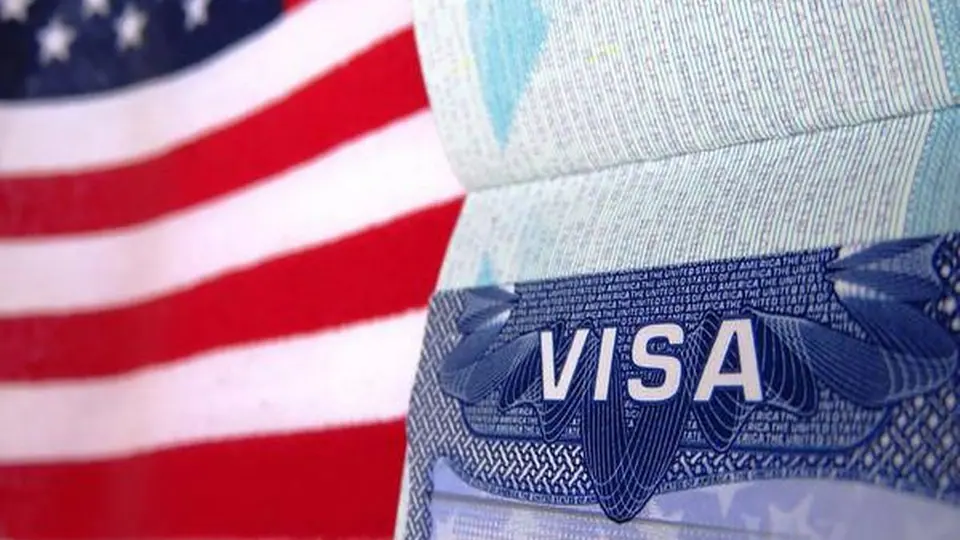
Is your case complete and your interview finished, yet your visa is being delayed simply because of your nationality? You are not alone, and there is now a legal avenue to challenge this.
At MC Law Firm, we are preparing a federal lawsuit with multiple plaintiffs challenging the immigrant visa pause affecting nationals of 75 countries that began on January 21, 2026, and we are evaluating eligible participants.
What Are We Challenging?
As of January 21, 2026, the U.S. Department of State stopped issuing immigrant visas to nationals of 75 countries. This does not mean that applications have completely stopped. Applications are still being accepted and visa interviews are still being conducted. However, the key factor determining whether a visa is issued is not the country where the application was filed, but the applicant’s nationality. As a result, the process may appear to be moving forward, but the visa is ultimately not being issued.
Imagine that a consular officer reviews an application and finds no issue that would prevent the applicant from receiving a visa. Nevertheless, the applicant cannot receive the visa simply because their country of citizenship is covered by this policy. In other words, even if the individual review of the applicant’s case is favorable, their nationality alone is being treated as sufficient grounds to withhold the visa.
That is precisely the central argument of this lawsuit. The pause effectively creates a new restriction that is not provided for by law and replaces the individualized assessment that should be conducted in each case.
Who Is This Lawsuit Specifically For?
The strength of this lawsuit depends on having the right plaintiffs. If you meet the criteria below, your case may be a strong candidate for consideration as part of the main lawsuit:
You are a national of a country covered by the pause and are not also subject to a separate travel ban (see the list of 52 countries below).
You have a family-based (I-130) or employment-based (I-140) immigrant visa case that is currently in the consular processing stage.
You have completed the DS-260 and have an immigrant visa case number.
Your visa interview has been completed, and your case is being held or was refused solely because of this pause.
You are not already participating in another lawsuit challenging the same policy.
People who fully meet this profile form the strongest core group for the lawsuit. Individuals whose interviews have not yet taken place but whose documents are ready or whose interviews have already been scheduled may also be considered as a backup group.
The 52 Countries Affected Only by the Visa Pause
Not all 75 countries are in the same legal position.
Twenty-three countries are also subject to a separate travel ban (Presidential Proclamation 10998). Even if a court lifts the visa pause, the separate travel ban would remain an additional obstacle for individuals from those countries — meaning that a court victory may not provide a practical solution for them.
By contrast, the following 52 countries are affected only by this visa pause and therefore represent the clearest group for the main lawsuit:
| A-E | F-K | K-R | R-Z |
|---|---|---|---|
| Albania | Fiji | Kosovo | Rwanda |
| Azerbaijan | Ghana | Kuwait | Russia |
| Bahamas | Grenada | Kyrgyzstan | Saint Kitts and Nevis |
| Bangladesh | Guatemala | Lebanon | Saint Lucia |
| Barbados | Guinea | Liberia | Saint Vincent and the Grenadines |
| Belarus | Georgia | Moldova | Thailand |
| Belize | Iraq | Mongolia | Tunisia |
| Bhutan | Jamaica | Montenegro | Uganda |
| Bosnia and Herzegovina | Cambodia | Morocco | Uruguay |
| Brazil | Cameroon | Nepal | Uzbekistan |
| Algeria | Cape Verde | Nicaragua | |
| Democratic Republic of the Congo | Colombia | North Macedonia | |
| Armenia | Egypt | Pakistan | |
| Ethiopia | Jordan | ||
| Kazakhstan |
If your country is on this list, you are generally a stronger candidate for consideration in the main lawsuit.
Who Is Not a Good Fit for This Lawsuit?
Being transparent about who may not be a good fit is an important part of this lawsuit. If any of the following applies to you, you may not qualify for the main lawsuit, or your situation may need to be evaluated separately:
You have a Diversity Visa (DV Lottery/Green Card Lottery), adjustment of status, adoption, or another special-category case. These cases are governed by different laws and strict deadlines and are not the subject of this lawsuit.
You are also subject to a separate Presidential Proclamation or travel ban (the 23-country situation described above). The separate restriction may remain even if the visa pause is lifted.
The consular post has identified another independent issue in your case, such as missing documents, security or administrative processing, suspected fraud or misrepresentation, or a public charge issue. In such circumstances, the visa pause is not the only obstacle.
You are already participating in another lawsuit challenging the same policy.
If one of these situations applies to you, it does not necessarily mean that you have no options. It simply means that your case may require a different legal strategy from the main lawsuit.
How Does the Legal Fee Work?
The fee structure is transparent and phased:
The total fee is $2,250 for each accepted primary applicant or petition.
$750 is due only after the firm accepts your case and the representation agreement is signed.
The remaining $1,500 becomes due only after you are admitted to the United States on your immigrant visa, in three $500 payments on days 30, 60, and 90.
A spouse and children included in the same case are covered without additional attorney’s fees. If the firm declines representation or the lawsuit is never filed, all amounts paid will be refunded in full.
Why Should You Join This Lawsuit?
There is currently no class action lawsuit that you can simply wait to join. All lawsuits filed to date involve individual plaintiffs or a limited number of plaintiffs.
Ullah v. LaFave: The court provided relief only to the individual who filed that lawsuit.
Sangster v. Rubio: Temporary relief was granted, but the plaintiff later withdrew from the case.
CLINIC v. Rubio: The case is still ongoing, but when and how it will be resolved remains uncertain.
Because the government is not a party to these individual and limited-plaintiff cases, obtaining relief may be possible.
How Can You Participate?
The process begins with a short preliminary screening form that takes approximately 3–4 minutes to complete.
Important security rule: Do not upload documents to the form. Do not enter your passport number, A-Number, or full case number. If your case moves forward, this information will be requested separately through a secure method.
Submitting the form does not automatically make you a client or plaintiff and does not create any payment obligation. The team manually reviews each submission, followed by an attorney review and a conflict-of-interest check. Only accepted cases will receive a written representation agreement and an invoice.
