
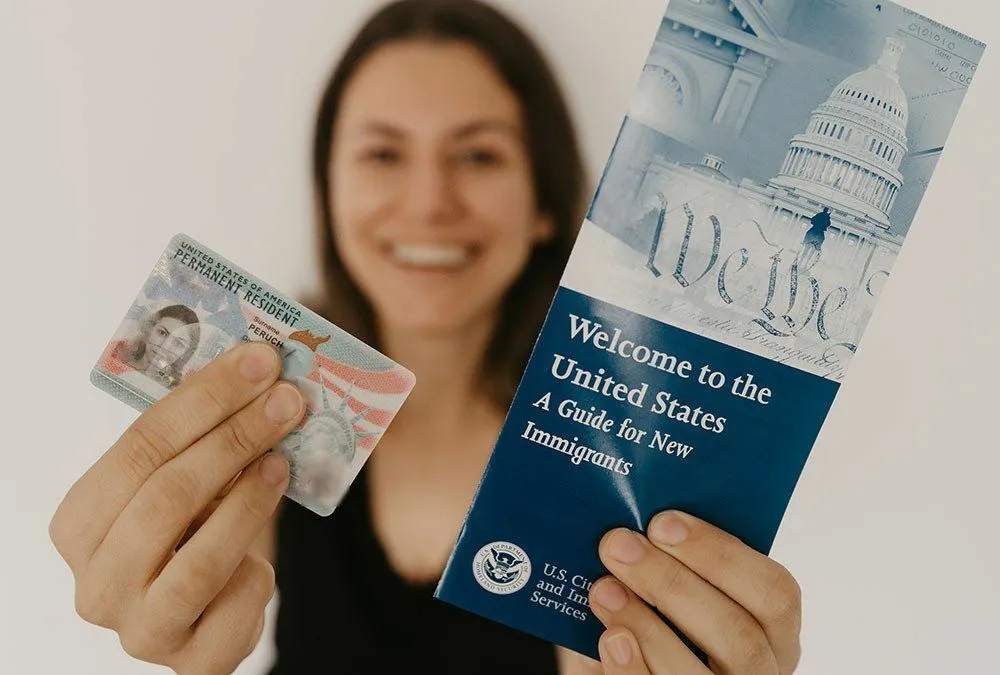
Many people who want to move to the U.S. get stuck at the same point: “I don’t have an employer to sponsor me, so I have no chance.” This is a common misconception. In the American immigration system, there are several powerful paths you can apply for on your own without being tied to an employer or a job offer; some of these even lead directly to permanent residency (green card).
Let’s be honest from the start: “sponsor-free” does not mean “easy.” Most of these paths require either a strong track record of success, significant capital, or a bit of luck. This guide brings together all the legitimate ways to move to the U.S. without an employer, along with their current status as of 2026.
What Exactly Does “Sponsor” Mean?
Much of the confusion stems from this word, because “sponsor” has three distinct meanings:
Employer sponsor: A U.S. company that hires you and files a petition on your behalf (e.g., H-1B, standard EB-2/EB-3, PERM process).
Family sponsor: A U.S. citizen or green card holder relative (spouse, parent, sibling) who brings you over.
Financial sponsor: A person who guarantees to the state that you will not become a burden (I-864 Affidavit of Support).
The focus of this article is the first type, i.e., paths that do not require an employer / job offer. None of the categories below make you dependent on a company; in most of them, you apply on your own (self-petition).
Getting a Green Card on Your Own: Self-Petition Categories
These are the most valuable paths in the immigration system because they do not require an employer, a job offer, or PERM (labor certification). You file the petition yourself, and your fate is in your own hands.
EB-1A: Extraordinary Ability (“Einstein Visa”)
The most solid path for strong profiles without an employer. Don’t let the nickname mislead you; it is open to every field, including business, art, education, and athletics, not just for scientists. Advantages: no employer required, no PERM required, premium processing available.
To apply, you need either a one-time major success (e.g., an international award) or to meet at least 3 of 10 criteria:
Important awards or honors
Membership in exclusive organizations
Press/media published about you
Jury/judge role evaluating the work of others
Original and important contributions to your field
Writing scientific/professional articles or publications
Exhibitions or showcases
Critical/important role in a leading organization
High salary compared to peers
Proven success in the artistic/commercial field
USCIS wants to be convinced in the final stage that you belong to the “top small percentage of your field”; therefore, it is expected that your recognition is independent and your impact is measurable.
Ideal for: internationally recognized academics, researchers, artists, athletes, and successful entrepreneurs.
EB-2 NIW: National Interest Waiver (Caution in 2026)
A path where those with an advanced degree (master’s/doctorate) or exceptional ability can apply on their own when their work serves the U.S. national interest. No employer, job offer, or PERM required. Assessment is based on the three prongs of the Matter of Dhanasar decision:
The work has both substantial merit and national importance
You are well-positioned to advance the proposed endeavor
On balance, it would be beneficial to the United States to waive the requirements of a job offer and thus of a labor certification.
2026 warning: NIW approval rates are low during the Trump era. The rate of ~95% in 2022 dropped to the ~35% band by the end of 2025; the scrutiny threshold has risen significantly. Saying “my field is important” is no longer enough; concrete metrics (job creation, revenue, patents, federal grant/laboratory connections) are needed.
If you have evidence for EB-1A, choose that; use NIW either as a backup or if your profile is strong but slightly below the “extraordinary” threshold.
Sponsor-Free Paths Through Investment
If you have capital, you can move to the U.S. by investing in your own business without needing any employer.
E-2: Treaty Investor Visa
This matters because E-2 eligibility depends entirely on nationality. Only citizens of countries that have a qualifying treaty with the U.S. can apply. That excludes citizens of many large countries, including China, India, Vietnam, and Nigeria.
The logic: making a substantial investment in a U.S. business and actively managing it. Highlights:
No fixed minimum amount (in practice, successful applications are generally $100,000–$200,000 and above)
Indefinitely renewable (as long as the business remains active)
Spouse can obtain work authorization in the U.S.
Disadvantage: it does not grant a green card directly; E-2 holders seeking permanent residency should plan for EB-1A or EB-5 in parallel.
EB-5: Investor Green Card (Direct Permanence)
Unlike the others, EB-5 grants a green card directly; it does not require extraordinary ability or existing work. Requirements:
$800,000 investment in a targeted employment area (TEA), $1,050,000 investment in a standard project
Creating at least 10 full-time U.S. jobs
The investment provides a green card for you, your spouse, and your unmarried children under 21
The program is authorized until at least September 30, 2027, under the 2022 reform act.
Classic Work Visa Without U.S. Employer
O-1A: Extraordinary Ability (Temporary)
O-1A technically requires an employer/sponsor petition, but the trick is this: your own U.S. company can file the petition for you if a proper governance structure is established (USCIS clarified this in 2025). So, there is no need for an outside boss. Highlights:
No annual quota or lottery
Granted for up to 3 years, extendable indefinitely
At least 3 of 8 criteria must be met
Naturally bridges to an EB-1A green card
It has become the standard for entrepreneurs, researchers, and creative professionals with measurable success.
Green Card Lottery (DV Lottery)
The purest form of being sponsor-free. The Diversity Visa program offers up to 55,000 green cards per year through random selection to citizens of countries with historically low immigration to the U.S.. No employer, relative, or investment required.
Participation is free and only done through the official site, dvprogram.state.gov
Basic requirement: either a high school diploma or 2 years of work experience in a qualified profession within the last 5 years
Eligibility is determined by place of birth (not citizenship or residence)
Selectees only learn via “Entrant Status Check”; every message saying “you won” via email/mail is a scam
The program is currently under uncertainty. The Department of State has entered a vetting/pause process in DV visa processing due to security concerns. It was announced that the program will continue in later periods after necessary security measures are taken.
So, participating in the lottery remains a low-cost “extra ticket,” but it should not be your only plan. Verify the current status annually via travel.state.gov.
No Sponsor, No Permanent Visa, and No Work Rights
Some paths are called “sponsor-free” but grant neither a green card nor the right to work freely. These should be seen as bridges:
F-1 (Student visa): Requires acceptance from a U.S. school (this is not a “sponsor”). Work rights are limited; but it opens the door to U.S. work experience with OPT and STEM extensions after graduation, which builds the foundation for future O-1/EB paths.
B-1/B-2 (Business/Tourist visa): Can be used for market research, investor meetings, or company setup preparations; but you cannot work with this visa, and it does not provide a green card. It is only a discovery tool.
Think of these categories as a stepping stone to transition to actual sponsor-free paths (EB-1A, E-2, O-1).
Which One Is Right for You? Quick Comparison
| Path | Sponsor? | What It Gives | Basic Requirement | For Whom |
|---|---|---|---|---|
| EB-1A | None (self-petition) | Green card | Proof of extraordinary success (3/10 criteria) | Renowned academic, artist, athlete, entrepreneur |
| EB-2 NIW | None (self-petition) | Green card | Advanced degree + national importance (concrete metrics) | Researcher, engineer, qualified entrepreneur |
| E-2 | None | Temporary (renewable) | ~$100–200K+ investment | Investor/entrepreneur |
| EB-5 | None | Green card (direct) | $800K–$1.05M + 10 jobs | Investor with capital |
| O-1A | Your own company | Temporary | Extraordinary ability (3/8 criteria) | Profiles that can bridge their success |
| DV Lottery | None | Green card | High school/2 years work experience + luck | Anyone (uncertain in 2026) |
Conclusion
Not having an employer does not mean the U.S. path is closed; on the contrary, these paths you can apply for on your own are often freer and stronger.
If you have a strong file of success, EB-1A or O-1A; if you have an advanced degree and concrete impact, EB-2 NIW; if you have capital, E-2 or EB-5; and if you are open to some luck, the DV lottery are on the table.
Success in these paths depends on choosing the right category and setting up your file according to that category’s high evidentiary standard. The wrong category or weak documentation means months of delay and rejection; the right strategy accelerates your process. Therefore, especially if you appear suitable for more than one path, evaluating your profile with an experienced immigration lawyer is the smartest first step.
How Can MC Law Firm Help You?
As MC Law Firm, we are experts in self-petition paths that do not require an employer. Although sponsor-free paths seem “free,” they are the areas that require the most strategy, and many applications are rejected even with a suitable profile due to wrong category selection or weak documentation.
We first evaluate your profile realistically and determine the strongest path for you, then build your file from start to finish according to the evidentiary standard of that category.
Contact our office today to discuss which path is right for you.
Contact
201-957-0909
[email protected]
Follow Us
Instagram: @allthingsimmigration
